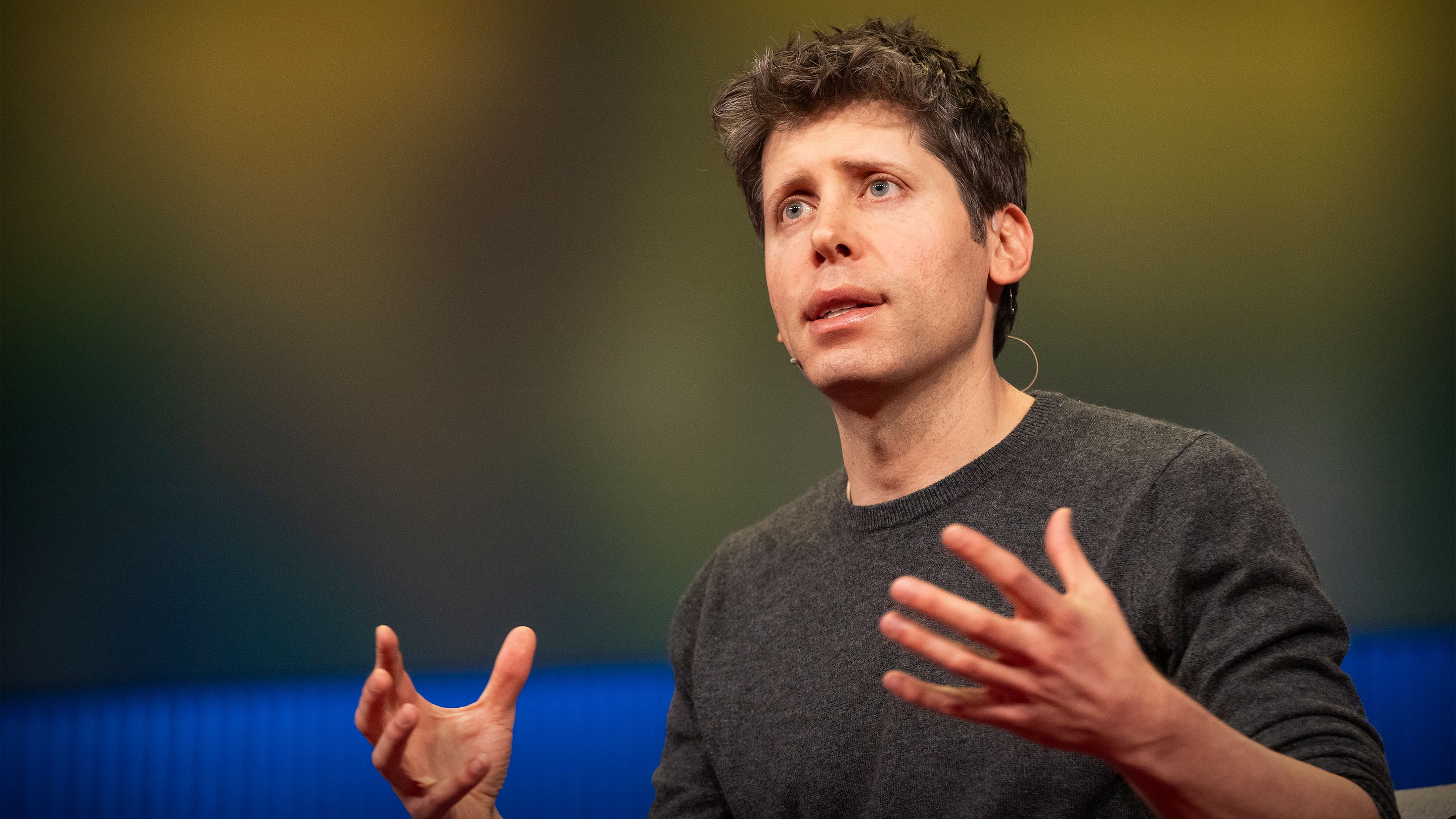
Sam Altman, the often-smiling oracle of artificial intelligence and CEO of OpenAI, has once again thrown the internet into a frenzy — this time by suggesting that many of the jobs AI might soon replace weren’t “real work” to begin with. The comment, made during OpenAI’s DevDay conference, came wrapped in philosophical musings about the nature of labor. Unfortunately for Altman, nuance tends to evaporate quickly once Twitter (or X, if you insist) gets hold of a quote.
During a live conversation with AI newsletter founder Rowan Cheung, Altman entertained a thought experiment: how a farmer from half a century ago might view today’s digital workforce. “That farmer,” Altman said, “would probably look at what you do and I do and say, ‘That’s not real work.’” He added, with a nervous chuckle, that this realization makes him “a little less worried” about AI replacing such jobs — though “more worried in some ways” because, as he put it, “if you’re farming, you’re doing something people really need. That’s real work.”
The internet, predictably, exploded. Clips were reposted, reactions cascaded, and memes multiplied faster than ChatGPT can generate them. Some labeled Altman’s words “elitist,” others “dystopian.” A few applauded his honesty. Whatever your take, the remark sliced open a deep, decades-old debate: what exactly counts as “real work” in an economy where millions of people spend their days typing, clicking, and joining video calls that end with everyone wondering why they were invited in the first place?
Altman’s blunt assessment didn’t spring from nowhere. The late anthropologist David Graeber made a similar argument in his viral 2013 essay On the Phenomenon of Bullshit Jobs. Graeber described a growing segment of white-collar employment as “pointless toil,” suggesting that entire industries survive by maintaining appearances — endless meetings, circular reports, and PowerPoint decks that no one reads. His thesis hit such a nerve that it became a bestselling book in 2018. Many office workers quietly admitted he was right.
Fast forward to today, and artificial intelligence appears to be testing Graeber’s theory in real time. If a language model can perform large chunks of your job faster, cheaper, and with fewer bathroom breaks, it’s hard not to wonder whether your role was designed around efficiency or theater. Yet Altman’s framing — that these might not have been “real jobs” — felt to many like salt in the wound. After all, people still rely on those paychecks to buy “real” groceries and pay “real” rent.
Critics were quick to point out that labeling displaced workers as victims of their own uselessness oversimplifies reality. Automation doesn’t just remove the “fake” work; it often tears through the connective tissue of the labor market — middle-skill roles that keep organizations functioning. You can automate data entry, but you can’t (yet) automate empathy, judgment, or creative improvisation. Replacing tasks doesn’t mean the people performing them were unnecessary; it means management failed to design work that used human potential wisely.
And yet, Altman wasn’t entirely off base. His comment, when stripped of corporate-speak, points to a truth most professionals recognize but rarely admit out loud: an alarming percentage of modern jobs are padded with busywork. Layers of reporting. Checklists no one reads. Follow-up emails summarizing meetings that could’ve been a two-line Slack message. This “meta-work” — work about work — consumes vast amounts of time and energy. It’s not hard to imagine AI automating these rituals out of existence.
In that sense, Altman may not have been insulting workers so much as highlighting a collective delusion. The digital age rewarded appearance over substance. Many of us have mistaken constant activity for productivity. When AI begins to strip away the make-work layers, it exposes how fragile that illusion really was.
But the data complicates the story. A 2021 study drawing on the European Social Survey found that only around five percent of people described their jobs as “useless.” In the United States, the number was closer to twenty percent — not exactly a crisis of meaning. More interestingly, researchers discovered that feelings of pointlessness correlated strongly with poor management and toxic work culture rather than the intrinsic value of the job itself. Translation: people don’t feel useless because their work lacks purpose; they feel useless because the system managing them does.
That conclusion matters because it undermines the idea that AI is coming to rescue us from empty labor. If the problem lies in management culture — endless micromanagement, broken feedback loops, and corporate theater — then deploying more automation might only make things worse. AI could streamline the bureaucracy, sure, but it might also accelerate the dehumanization of work by reducing people to nodes in an algorithmic workflow.
Still, it’s hard to deny that automation is creeping into the office at alarming speed. A recent Stanford study found that AI tools are already devouring entry-level coding and customer service roles. The tasks most vulnerable to replacement aren’t the grand, creative ones; they’re the small, repetitive actions that glue the system together. Ironically, those are also the tasks that make workers feel like they’re “doing something” tangible. Remove them, and you risk leaving people unsure what their value is.
Altman’s provocation forces a bigger conversation about meaning in the age of machines. What will society look like if AI handles not just labor, but purpose? In an economy obsessed with efficiency, there’s little room for inefficiency — even when inefficiency is what gives work its humanity. The casual chat by the coffee machine, the messy brainstorm, the human mistake that leads to an unexpected discovery — these are the moments AI can’t reproduce. Yet they’re also the first to be trimmed when the accountants come calling.
The irony is delicious: the man whose company popularized ChatGPT may have accidentally revealed why people fear it so much. Not because it’s “too smart,” but because it mirrors us back at our most mechanical. If AI can mimic our output with 90% accuracy, then perhaps the remaining 10% — that stubborn streak of creativity, empathy, and imperfection — is where “real work” still lives.
Altman, to his credit, did hint at this nuance. He emphasized that farming, or any job tied to tangible necessity, will always remain “real.” The digital world, on the other hand, is still figuring out what that means. Maybe the future of work won’t be about what tasks we perform, but about the meaning we create while doing them. Maybe the real revolution isn’t automation — it’s self-awareness.
Until then, expect more headlines, more outrage, and more think pieces like this one dissecting Altman’s sound bites. The man runs a company that built machines capable of arguing with humans for sport; he probably knew exactly what he was doing. And maybe that’s the final irony — in making us question what “real work” is, he’s doing some of it himself.